Ford Industrial In-Line 6 Cylinder Gas Engines: How to Tell Them Apart
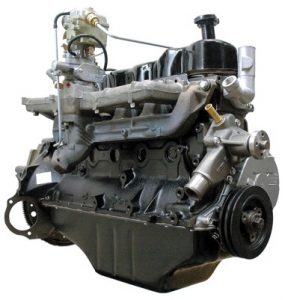 This Foley Engines Tech Tip is one in a series we publish for the industrial engine community. It focuses on how to differentiate the Ford Industrial In-line 6 engines like the 200GF, the Ford 223GF and the Ford 300 CSG649/Ford 240 six cylinder engines. It is one of several we have published on Ford Industrial engines. See for example,
- Why Did My Ford 172/192 Distributor Fail,
- Why Is My Exhaust Manifold Leaking? A Guide To Deutz, Deere, & Perkins Engines,
- How to Install a Wisconsin, Continental, Perkins or Ford Ignition Coil,
- Identifying and Maintaining the Ford C6 Transmission as Used in Industrial Applications,
- Perkins, Ford, White-Hercules, Continental and Chrysler Water Pumps,
- Ford 460 Industrial Engine Cam Bearings,
- How To Identify A Ford 460 Industrial Engine,
- Getting The Right Parts For A Ford VSG Series Engine,
- Ford BSD444T: How to Tell the Difference between Early and Late Models and

Ford Industrial in-line six cylinder gas engines are commonly used in wood chippers and other industrial applications. Over the years, engine serial number identifying decals become hard to read or are no longer present. When people order parts for these Ford Industrial engines they often are puzzled regarding which engine they have. Here are some ways to tell them apart which should make it easier to order parts for these six cylinder Fords.
|
Engine Type |
Manifold Location/Type |
Water Pump |
|
Ford 200 |
Intake Manifold is part of the Cylinder HeadNo Side Cover | |
|
Ford 223 |
Manifolds are on LEFT side of engine when viewed from the REAR of the engine (flywheel end) | One Water Pump; only 3 mounting bolt holes |
|
Ford 240/300 |
Manifolds are on RIGHT side of engine when viewed from the REAR of the engine (flywheel end) | Two different Water Pumps depending on shaft diameter (5/8″ vs.3/4″); each with 4 mounting bolts of varying lengths (be cautious when reinstalling) |