Not getting much life out of your PTO?
This Tech Tip presents some common issues that are not always obvious an may be shortening the life of your Twin Disc®, Rockford™, NACD® or WPT Power® PTO clutch. Additionally, we will provide some possible solutions to help extend the life of your power take off clutch. In earlier tips, like Tech Tip# 48: Maintaining Your Twin Disc, Rockford, NACD or WPT Power PTO Clutch , we have stressed how regular clutch adjustment and lubrication is critical to a PTO’s lifespan. Not keeping up with proper maintenance and/or pushing equipment too hard are the most common reason for premature PTO failure. But, they are not the only reasons.
A PTO is just one part of a group of combined systems that make up any piece of equipment and issues with those other systems can contribute to premature failure of your PTO. Followinglarger system and the other components of that system can often contribute or cause early failure too. Following a a few examples:
Problem: Excessive Side Load
Side load, is the force pushing or pulling against the output shaft of a PTO. All PTOs are designed to handle varying degrees of sideload and proper calculation of this variable is a critical component of selecting the right size PTO for an application. We have seen PTOs with as many as 7 or 8 drive pulleys on the output shaft, equipment manufacturers using smaller diameter drive pulleys to get more torque out of the same engine and over zealous mechanics over tensioning the belts. In any of these cases, this extra force can cause the shaft to operate off of the level plane it is designed to operate on (i.e. alignment between crankshaft and PTO shaft) and this in turn put excess pressure on the bearings and clutch pack causing excess heat, wear and eventually failure. We have seen this more often in wood chippers, tub grinders, and other aggressive applications and in extreme cases it can even cause the main shaft to fail.
Even if the PTO is “side load rated”, it is only rated to handle a certain range of load. If operated continuously at the outside edge of that range and/or if there are surges in torque (ex. from equipment bogging down) that push the PTO outside of it design range, you can have a pilot bearing doing the Texas Two Step in the flywheel housing. This can lead to a ruined pilot bearing, bearing carrier and perhaps even a flywheel. Whatever the cause, if your PTO clutch is allowed to twist or bind up, you’re not going to have a very productive day and your crew may be going home early.
Side Load Solutions
The first solution is to make sure your unit is maintained, installed properly and the drive belts are not over tensioned, After that, we have seen many customers effectively develop a PTO cradle system to provide added support to the PTO which provides added resistance to the sideload pressures that cause damage, buying you more life from your PTO. Many of the larger and heavier units recommend just such a support system and have provisions in the bell housing to allow supports to be bolted to the unit. We have seen support brackets fabricated using two pieces of flat 3/8 to 1/2 inch steel plate ; one for each side of your PTO. Often these steel plates are configured in a curved fashion to follow and bolt to the circular arc of the back of the PTO housing. Then each bracket is bolted or attached to added supports on the deck of the machine the PTO clutch is mounted on. When properly executed, these supports create a rigid cradle for the PTO that helps to reduce twisting when the clutch is engaged.
If you are still having an issue, after confirming proper bell housing alignment (see below), give us a call and we can help you determine whether an upsized PTO is more appropriate for your specific application.
Problem: Bell Housing Misalignment / Excess Endplay or Flywheel Runout
The bell housing connects your PTO to the engine (for a quick overview of how to identify your bell housing size see Tech Tip #41: SAE Bell Housings Made Easy!). If the bell housing isn’t square on the back of the engine block, the centerline of the PTO output shaft won’t be aligned with the centerline of the crankshaft putting excess, mis-aligned force on the PTO and pilot bearing leading to premature wear on both the pilot bearing and the PTO. Similarly, if the flywheel is rotating out of alignment (on possible reason being engine main bearings wearing out) it will transmit that irregular force through the PTO causing it to wear faster.
Misalignment Solutions
First, Foley Engines suggests that, when you have the PTO off of your engine you should use a dial indicator to ensure that the center bore of the bell housing is concentric with the engine and correctly aligned. At this time you should also inspect endplay and runout on the engine flywheel using a dial indicator to confirm that 1) the face of the flywheel, when rotated 360 degrees remains level within acceptable ranges; 2) the flywheel pilot bore runout is within range and not worn to that the pilot bearing easily slides in an out; 3) the engine’s radial endplay is within tolerance by comparing manufacturer specs with to your engine when applying upward radial force on the flywheel; and 4) the engine crankshaft endplay is withing tolerance. WPT Power’s Installation & Maintenance Manual , which is available for free as a pdf download, provides detailed instructions on the process for these measurements and acceptable ranges for a wide array of PTOs.
Those measurements will help you pinpoint a likely culprit for the excess wear. But, if all of that checks out, give our team a call and we can help you diagnose the issue or help identify a more appropriate replacement PTO for your application.
Problem or Canary In The Coal Mine: Pilot Bearings
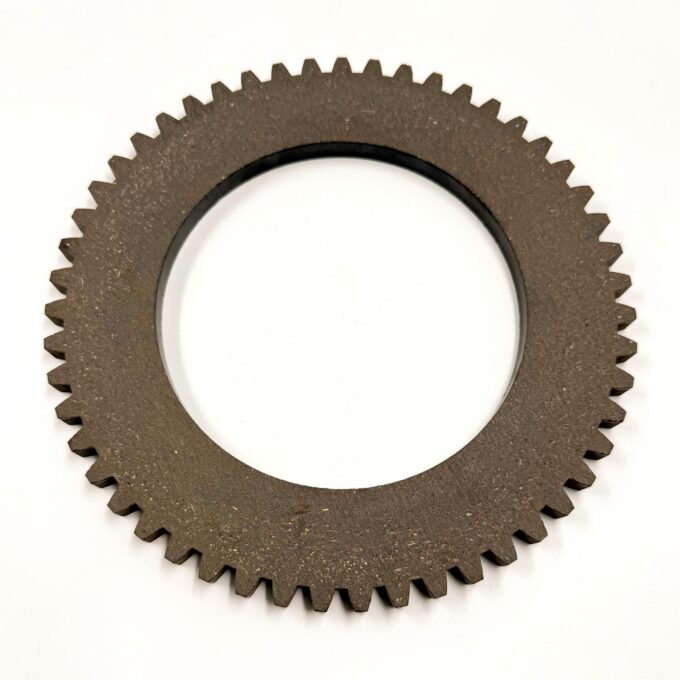
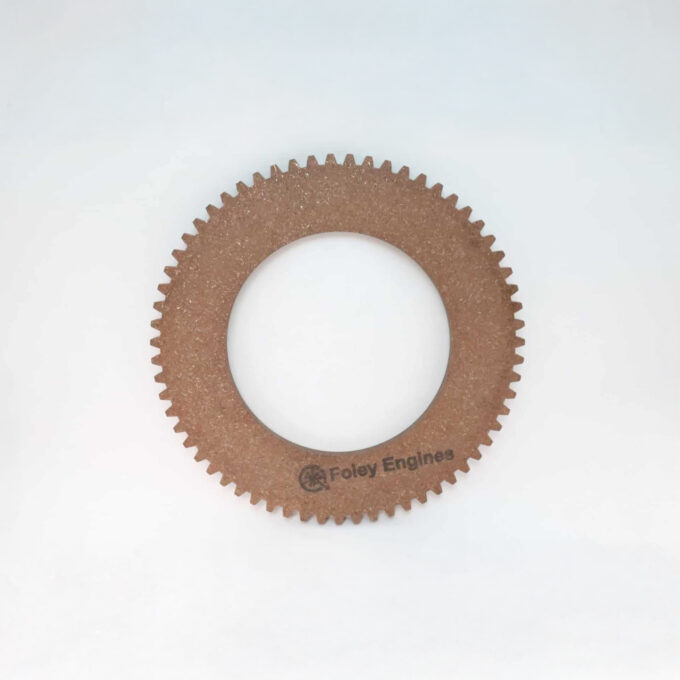
As most mechanics know, the pilot bearing is pressed into the flywheel and the PTO input shaft rides within it. A worn pilot bearing or pilot bearing carrier will cause problems with your Twin Disc® or Rockford™ clutch and could lead to flywheel damage. The pilot bearing is one component of the PTO that allows the engine flywheel to keep spinning even when the PTO shaft is not. It also provides a certain degree of lateral support for the PTO shaft, so if it starts to fail or the bearing carrier is worn allowing excess lateral movement, these irregular movement can lead to excess wear on the clutch pack and PTO. On the other hand, if there is a failure else, like some of those discussed earlier in this tip, they can lead to pilot bearing wear and eventual failure (i.e. the canary in the coal mine).
Pilot Bearing Solutions
Today, most pilot bearings are sealed and don’t require grease, but there are plenty of units that still have greaseable pilot bearing. Obviously, if your PTO has a greaseable pilot bearing you need to make sure it’s being maintained. If your pilot bearing gets grease from a hose connected to a zerk fitting in the bell housing, make sure to inspect that hose to confirm it is in good shape and the grease is getting to the pilot bearing and replace it if it looks suspect. We also recommend replacing your pilot bearing when you replace the clutch pack, since it can be hard to assess wear withing a sealed bearing. We can even help to figure out if there is your PTO and flywheel can accept a dimensionally wider pilot bearing that might give it some more durability in your application. You can browse the most common bearings here on our website.
Whatever the cause of the issue, we want to help you find a solution. Don’t hesitate to give us a call today.
Manufacturers names, symbols and numbers are for reference purposes only and do not imply manufacturing origin.