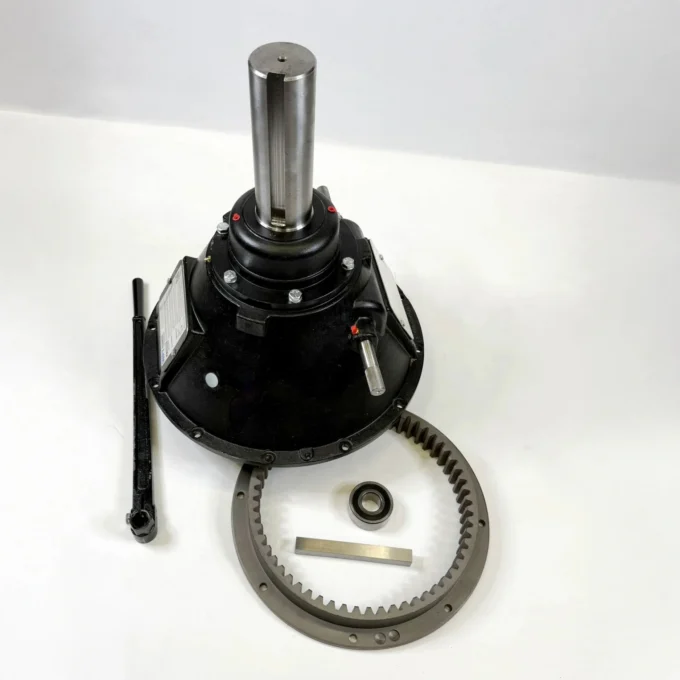
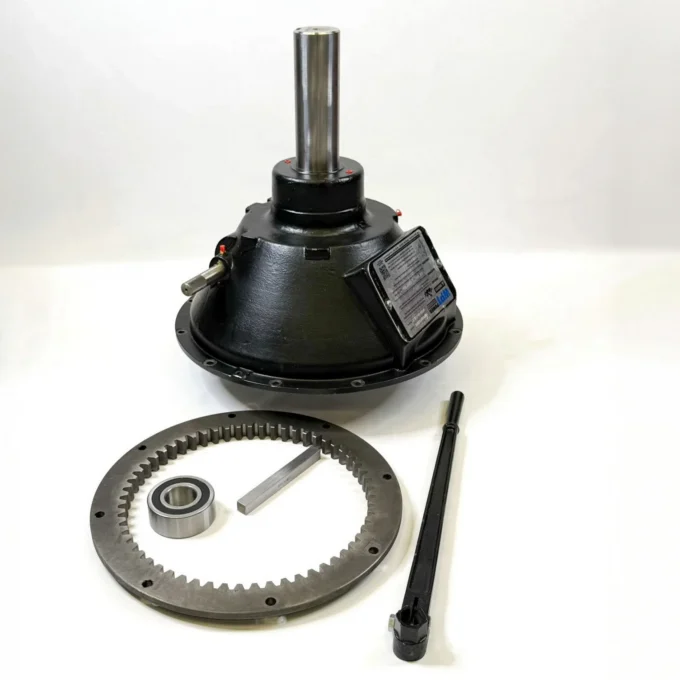
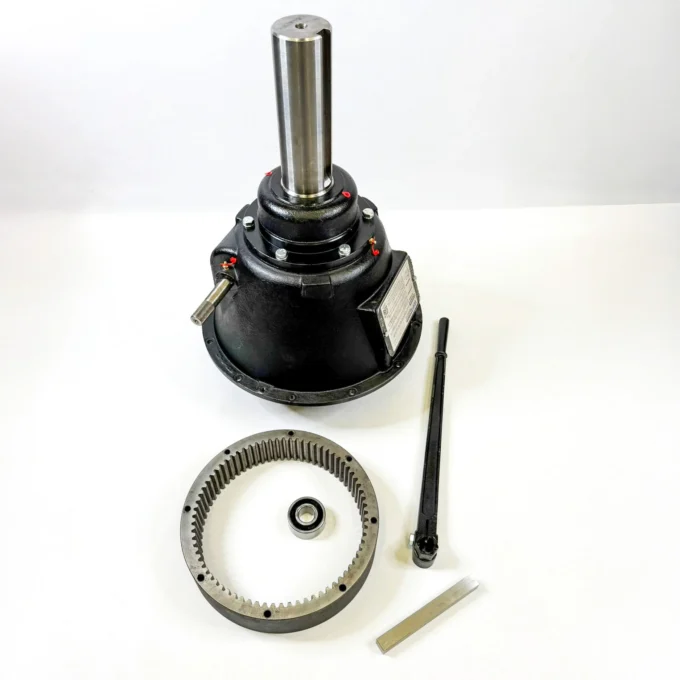
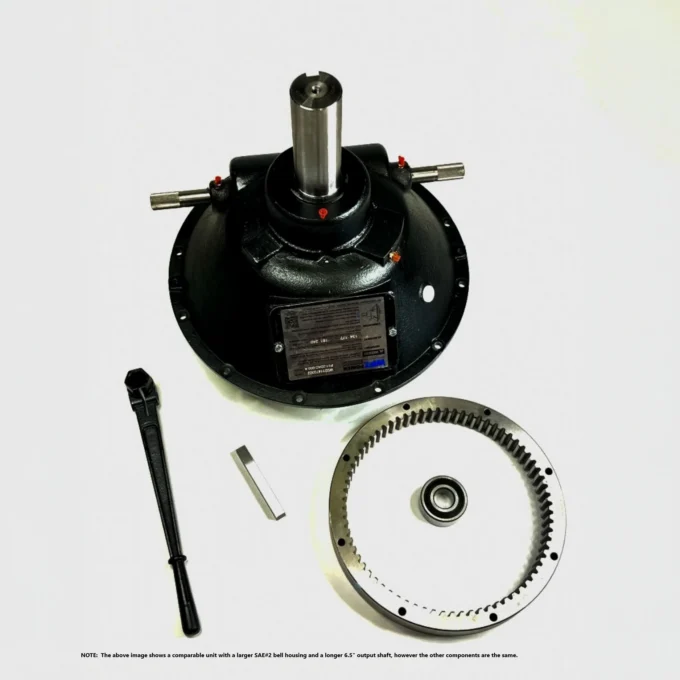
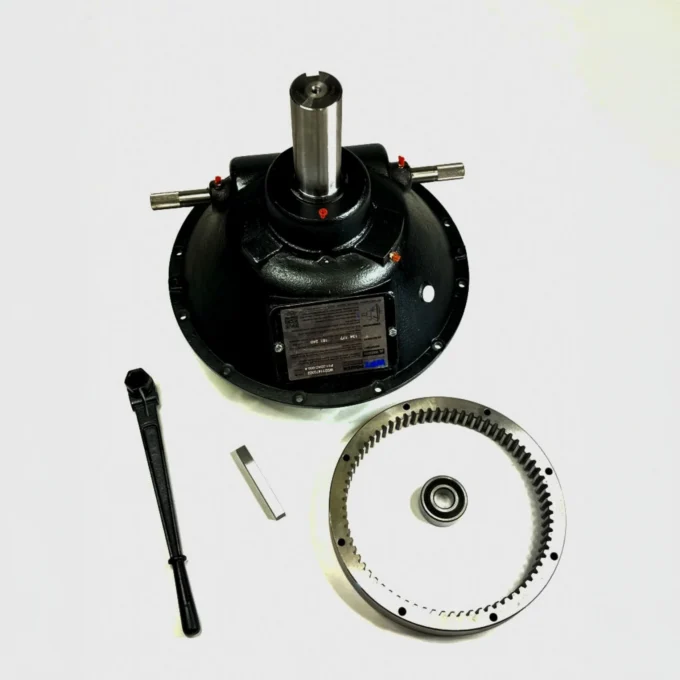
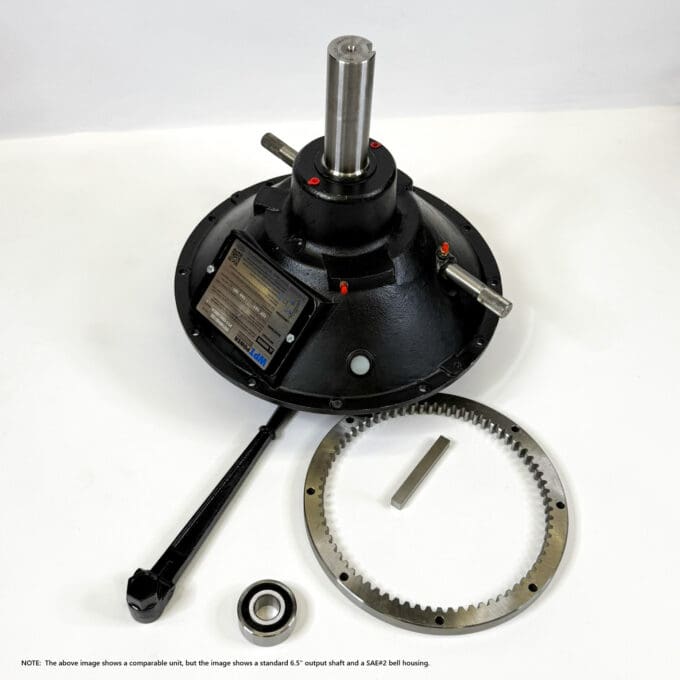
Keeping your Rockford™, Twin Disc®, NACD® or WPT Power® over-center clutch in good operating condition is easy if you follow these guidelines. This Foley Tech Tip will show you how to know when to adjust your clutch, how to adjust it, and how to keep it lubricated properly.
When Do You Adjust Your PTO?
The key to maintaining your clutch is knowing when to adjust it and, as with many things, this depends on how much and what kind of use it gets. You should monitor the force necessary to engage your clutch and if that force drops by 10-15% from the recommended engagement force ranges, your clutch facings (aka: clutch discs) are wearing and your PTO needs adjustment. Sometimes it is hard to tell from day-to-day just how much the engagement force has changed so a good rule of thumb is to measure the engagement force weekly during active use.
Note that when you replace your PTO or the clutch pack within it, you should recheck the engagement force as soon as you install it and again after a day or so of use. There is often some settling after the first factory and first installation adjustments that causes the clutch discs to loosen and the added adjustments will protect your investment until you can start with normal recommended adjustment intervals.
How to Monitor Engagement Force
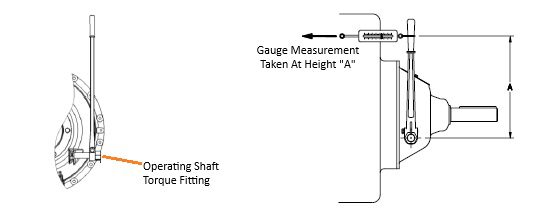
Engagement force is a measure of the force required to engage the clutch in your PTO: Too light and friction discs will not be held firmly causing premature disc wear and often also excessive heat that can damage the clutch pack itself. Too heavy and you risk putting too much pressure on PTO components potentially damaging them and, more noticeably, making it harder to engage or disengage. There are two common locations to measure this force: 1) where the engagement handle meets the operating shaft there is often a socket fitting to allow you to use a torque wrench; or 2) You can measure the amount of pull from the handle at a specified height (force measurements for the two methods will be different). The chart below shows you the acceptable torque ranges for the most common sized PTO Clutches regardless of whether your PTO was made by NACD, Rockford, Twin Disc or WPT Power.
| DISC DIAMETER (# DISCS) | TORQUE AT OPERATING SHAFT lbf-ft (N-m) | HAND FORCE AT LEVER lb (kg) | HAND FORCE MEASUREMENT HEIGHT (“A”) |
| 8″ – Single Disc | 71/94 (96/127) | 64/85 (29/39) | 13.3″ |
| 10″ – Single Disc | 88/117 (119/159) | 79/106 (36/48) | 13.3″ |
| 11″ – Single Disc | 107/141 (144/191) | 97/127 (44/58) | 13.3″ |
| 11″ – Two Disc | 134/177 (181/240) | 121/160 (55/73) | 13.3″ |
| 11″ – Three Disc | 171/227 (232/308) | 98/130 (44/59) | 21″ |
| 14″ – Single Disc | 218/289 (295/391) | 125/165 (57/75) | 21″ |
| 14″ – Two Disc | 218/289 (295/391) | 125/165 (57/75) | 21″ |
| 14″ – Three Disc | 218/289 (295/391) | 125/165 (57/75) | 21″ |
| 18″ – Two Disc | 514/676 (696-915) | 218/288 (99/131) | 28.2″ |
| 18″ – Three Disc | 514/676 (696-915) | 218/288 (99/131) | 28.2″ |
How to Adjust Your Clutch
Here are the steps to take: Disengage the clutch, remove the inspection plate on the bell housing, and rotate the clutch until you can see and access the adjusting ring. Depending on the manufacturer and clutch the adjusting ring will be held in place by a “lock” of varying styles (i.e. pin you pull up, spring that is lifted up or screw lock that holds adjusting ring outer notches in place). When unlocked you will be able to rotate the adjusting ring to increase or decrease the engagement force. Rotate the adjusting ring counterclockwise to lighten force; clockwise to increase the engagement force for the clutch. Then adjust to obtain the proper handle engagement force for your PTO. When done, reposition the locking mechanism to lock in the adjustment you just made.
We dug up a few videos from the archives to show you how to adjust a Twin Disc or WPT Power PTO, or a Rockford or NACD PTO as they have difference locking mechanism designs for their clutch packs.
Lubricating Your Clutch
We recommend using an NLGI #2 lithium based grease like Lubriplate 1200-2 with an EP additive (extreme pressure). This is the ideal grease for when ambient temperatures are between -25°F to +90°F; Above that range Phillips 66 Multiplex 220, Shell Gadus S3 V220C or equivalent are recommended; and below that Lubriplate MAG-1 or equivalent, a warm pair of boots and a hot cup of coffee! Grease the release bearings (if not sealed), the main bearings (rotate the shaft by hand while greasing until the grease just starts to appear at the relevant seal surface), and the cross shaft. After applying grease you should engage and disengage the clutch a few times to let the grease work its way in. Once a PTO is installed, follow the schedule below lubricating or inspecting at the earlier of the noted intervals.
Lubrication Schedule
| COMPONENT | LUBE INTERVAL | INSPECTION INTERVAL | NOTES |
| Bronze Collar & Wear Ring/ Non-Sealed Ball Bearings | 1-3 shots every 3 months/20 operating hours (10 hours for 18″ units) | Every 8-10 hours | NLGI #2 Lithium Based (see above recommendations) |
| Operating Shaft | 1-3 shots every 3 months or 100 operating hours | 3 months / 100 hours | NLGI #2 Lithium Based (see above recommendations) |
| Pilot Bearings (periodic lube style) | 1-2 shot every 3 months/100 hours | 3 months / 100 hours | NLGI #2 Lithium Based (see above recommendations) |
| Sealed Pilot Bearings (pre-lubricated) | None required | Inspect every 2 years or during component replacements | Replace bearings as needed |
| Main Bearings (greaseable) | 1-3 shots every 3 months or 100 operating hours | Every 8-10 hours | NLGI #2 Lithium Based (see above recommendations) |
| Main Bearings (oil lubed) – Except SP311OP Series | To fill level on oil gauge or bottom of check plug | Every 8-10 hours. Drain and fill every 6 month / 1000 hours | S.A.E. #10 for cold weather or S.A.E. #30 for hot weather |
| Clutch Linkages | 1 drop required per | 500 hours |
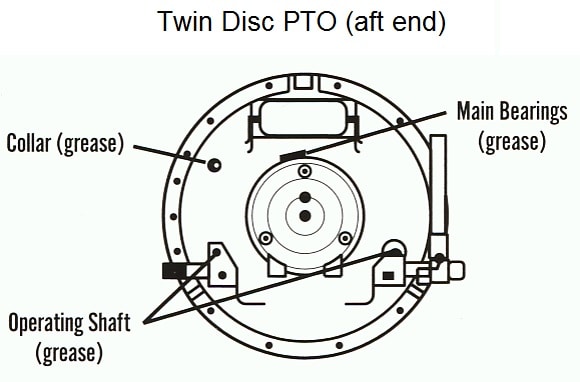
Finally, don’t over-grease your PTO. It may sound counter-intuitive, but we see a number of clutch failures every year due to over greasing. Most often in these cases the excess grease was absorbed into the clutch discs causing surface irregularities on the disc that, along with the grease, interferes with a tight clamping of the clutch discs, so the disc or discs slides when they shouldn’t and with the amount of force the clutch pack manages, they can heat up relatively quickly to high temperatures that if not addressed soon enough will damage the clutch pack as well as the clutch discs.
If you want more information on PTOs clutches, these are just a few of what you can find in our Tech Tip library:
- Tech Tip # 41: SAE Bell Housings Made Easy;
- Tech Tip # 67: How to Remove a Troublesome Pilot Bearing;
- Tech Tip # 93: What Do I Need To Find The Right Parts For My PTO Clutch? ; and
- Tech Tip #147: Not Sure Why Your PTO Keeps Wearing Down? Want It To Last Longer?.
You can also find some of the more popular clutch packs, friction discs, and other PTO maintenance parts on our website, but if you don’t see what you need give us a call. We stock complete PTOs and a huge inventory to make sure our customers can get back up and running as soon as possible. If you have any questions or just want to confirm what you think is right, give us a call at 866-821-2387 or e-mail us at info@foleyengines.com . We take tech support seriously and want to share our knowledge!
Manufacturer’s names, symbols, and numbers are for reference purposes only and do not imply manufacturing origin.