How a few simple steps can extend the life of your PTO
This Tech Tip, one in a series we publish for engine professionals, is aimed at helping people get more life out of their PTO clutch assemblies.
Other PTO Tech Tips include
- Tech Tip #48: Maintaining Your Twin Disc, Rockford, NACD or WPT Power PTO Clutch,
- Tech Tip #147: Running a NACD®, Rockford™, Twin Disc® or WPT Power® PTO? Want It To Last Longer?
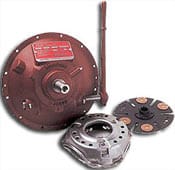 Experiencing short pilot bearing life in your NACD®, Rockford™, Twin Disc®, or WPT Power® clutch? Most of the time problems with pilot and other bearings can be traced back to three causes.
- Bell housing misalignment. – The bell housing connects your PTO to the engine (for a quick overview of how to identify your bell housing size see Tech Tip #41: SAE Bell Housings Made Easy!). If the bell housing isn’t square on the back of the engine block an, the centerline of the PTO output shaft won’t be aligned with the centerline of the crankshaft putting excess, mis-aligned force on the PTO and pilot bearing leading to premature wear on both the pilot bearing and the PTO. For a quick tip on how to remove a troublesome PTO pilot bearing see Tech Tip #67: How to Remove a Troublesome Pilot Bearing. Foley Engines suggests that you use a dial indicator to ensure that the center bore of the bell housing is concentric with the engine and correctly aligned.
- High side loads – Whether you are running a Twin Disc, Rockford, NACD or WPT Power PTO, they are designed to accommodate a certain amount of “side-load”. Often the pulley or pulleys installed on the output shaft to drive your equipment can transmit excessive side load forces through the PTO. How might this happen? If the belts on the pulley are over tightened or the engine involuntarily goes from a high RPM to a low RPM quickly (ex. a chipper or grinder getting bogged down), both scenarios can lead to pushing your PTO and pilot bearing beyond what they are designed to handle. Many PTOs already have predrilled holes in the back of the bell housing to accept a support plate. However, even if you won’t have these holes, that’s not a problem. Simply fabricate a rear support plate that would resemble a cradle to install at the back of the PTO. This will prevent side movement and deflection. Your pilot bearing will thank you. See Tech Tip #147: Running a NACD, Rockford, Twin Disc, or WPT Power PTO? Want It to last Longer? for more details on how to build a support cradle for your Twin Disc/Rockford PTO.
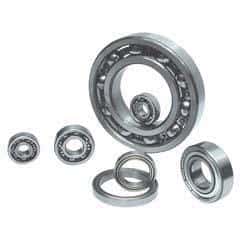 Inferior Pilot Bearings – Most bearing distributors have good computer-based bearing part number interchanges. The problem is when a guy calls his local bearing house for a pilot bearing, they’ll take the number you give them, run it through their computer and come up with an off-shore substitute. Their parts guy thinks he is doing you a favor by saving you a dollar or two with a no-name bearing. Now, we’ve got nothing against saving a buck, but please make sure that you aren’t replacing a sealed, double-row bearing with a single-row bearing in order to save a couple of bucks; you will pay for it in the long-run or maybe even the short-run. We stock a premium line of pilot bearings and would be happy to supply you with a pilot bearing that will give you a long service life.
Trouble getting your pilot bearing out? We have a tip for that, see our Tech Tip #67: How To Remove A Troublesome Pilot Bearing (Part I).
For a quick overview on how to adjust your over-center clutch, take a look at our Tech Tip #48: Maintaining Your Rockford and Twin Disc Power Takeoff Clutch.
Manufacturer’s names, symbols, and numbers are for reference purposes only and do not imply manufacturing origin.