This Tech Tip is one in our continuing series of informal notes that we hope will be helpful. This one focuses on how to ship a Deutz, Perkins or Ford Industrial engine.
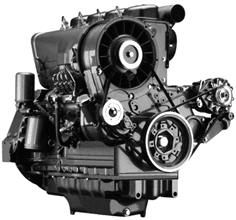
Deutz BF4L912
Shipping An Engine
Many people ask us for guidance when shipping Deutz, Perkins or Ford Industrial engines to us to be overhauled or when turning in a core engine. After all, we’ve been shipping engines for over 100 years (we were founded in 1916!). This Tech Tip shares some advise on how to do it safely.
1.) Drain all the fluids and remove the oil and fuel filters (although not the metal bracketry) from your engine before shipping. Fluids leaking from an engine cause big issues for shipping companies, from a mess to cleanup, to potential violations, refused deliveries and/or charge backs for the removal and disposal of these fluids. Either way, not removing these fluids causes added costs and delays for our customers which nobody wants.
2.) If you already have a Foley Engines engine stand or crate, place the core into it. We have taken care to build them correctly to make sure your engine got to you safely.
How to Make a Stand
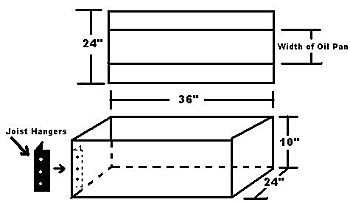
Don’t have a stand for your Perkins or Deutz? Years ago Don Mecimore, of Twin Disc Mid-Atlantic, designed the following engine stand. It is durable and inexpensive. The instructions and diagrams below show you how to build this rugged, re-useable engine stand for your Deutz or Perkins engine. This stand is so good some people even use it as an engine run-in stand.
Start with 8″ by 12″ piece of lumber and fabricate two pieces of 2″ X 12″ wood 4 feet long. Box the ends with two other pieces of 2″ X 12″. Run two additional pieces of 2″ X 12″ down the middle separated by the width of the oil pan (Perhaps 8″). Use metal roof joist hangars (available at any Home Depot) to strengthen your four corners. To see step-by-step instructions on how to build the stand, check out our video: Your Deutz or Perkins Engine Deserves a Good Stand.
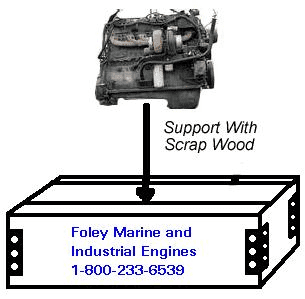
Now simply use pieces of scrap wood to add support to the engine. Strap the engine so it is standing tall (good engines deserve to stand tall!) and strap it so it sits with the oil pan within the middle frame.
Banding the Engine and Stand to a Pallet
1.) Pick up a flat pallet from your local grocery store. To make the flat pallet sturdier, nail a piece of scrap plywood across it to fill in the gaps. Put the engine that is now located in your new stand on to the grocery store type flat pallet.
2.) Flatten a cardboard box and lay it across the top of the engine. Using two or three metal bands thread them down between the fuel injection lines (if any) and the block to avoid bending the lines. Thread your metal banding through any engine lifting eyes already on the engine (as on a Perkins) to better secure the engine. Run your metal strapping down within the pallet, not outside of the edges, so that a forklift operator can’t break the bands with his forks and tumble your engine all over the floor of his 40′ trailer.
Summary
That is how to properly ship an engine. Engines not prepared this way may be damaged. They will be held up in transit while the freight company and their insurance company decide how to handle the shipment. While it may seem like a bit of work it is necessary to protect the engine and it makes a nice stand when it comes time to dress out the engine with accessories. (We’ve even seen people test run engines on such stands.)
We hope that this Tech Tip has been very helpful. We believe that Tech Support matters and we welcome your feedback. To contact Foley Engines™ directly, email us at info@FoleyEngines.com or call us directly at 800.233.6539 or International customers can call us at +1-508-753-2979. We have over a century (we were founded in 1916) of experience helping people running Deutz, Perkins, and Ford Industrial industrial engines.
This Tech Tip is one in our continuing series of informal notes that we hope will be helpful. This one focuses on how to ship a Deutz, Perkins or Ford Industrial engine.
DeutzBF4L912
Shipping An Engine
Many people ask us for guidance when shipping Deutz, Perkins or Ford Industrial engines to us to be overhauled or when turning in a core engine. After all, we’ve been shipping engines for over 100 years (we were founded in 1916!). This Tech Tip shares some advise on how to do it safely.
1.) Drain all the fluids and remove the oil and fuel filters (although not the metal bracketry) from your engine before shipping. Fluids leaking from an engine cause big issues for shipping companies, from a mess to cleanup, to potential violations, refused deliveries and/or charge backs for the removal and disposal of these fluids. Either way, not removing these fluids causes added costs and delays for our customers which nobody wants.
2.) If you already have a Foley Engines engine stand or crate, place the core into it. We have taken care to build them correctly to make sure your engine got to you safely.
Perkins 4236
How to Make a Stand
Don’t have a stand for your Perkins or Deutz? Years ago Don Mecimore, of Twin Disc Mid-Atlantic, designed the following engine stand. It is durable and inexpensive. The instructions and diagrams below show you how to build this rugged, re-useable engine stand for your Deutz or Perkins engine. This stand is so good some people even use it as an engine run-in stand.
Start with 8″ by 12″ piece of lumber and fabricate two pieces of 2″ X 12″ wood 4 feet long. Box the ends with two other pieces of 2″ X 12″. Run two additional pieces of 2″ X 12″ down the middle separated by the width of the oil pan (Perhaps 8″). Use metal roof joist hangars (available at any Home Depot) to strengthen your four corners. To see step-by-step instructions on how to build the stand, check out our video: Your Deutz or Perkins Engine Deserves a Good Stand.
Now simply use pieces of scrap wood to add support to the engine. Strap the engine so it is standing tall (good engines deserve to stand tall!) and strap it so it sits with the oil pan within the middle frame.
Banding the Engine and Stand to a Pallet
1.) Pick up a flat pallet from your local grocery store. To make the flat pallet sturdier, nail a piece of scrap plywood across it to fill in the gaps. Put the engine that is now located in your new stand on to the grocery store type flat pallet.
2.) Flatten a cardboard box and lay it across the top of the engine. Using two or three metal bands thread them down between the fuel injection lines (if any) and the block to avoid bending the lines. Thread your metal banding through any engine lifting eyes already on the engine (as on a Perkins) to better secure the engine. Run your metal strapping down within the pallet, not outside of the edges, so that a forklift operator can’t break the bands with his forks and tumble your engine all over the floor of his 40′ trailer.
Summary
That is how to properly ship an engine. Engines not prepared this way may be damaged. They will be held up in transit while the freight company and their insurance company decide how to handle the shipment. While it may seem like a bit of work it is necessary to protect the engine and it makes a nice stand when it comes time to dress out the engine with accessories. (We’ve even seen people test run engines on such stands.)
We hope that this Tech Tip has been very helpful. We believe that Tech Support matters and we welcome your feedback. To contact Foley Engines™ directly, email us at info@FoleyEngines.com or call us directly at 800.233.6539 or International customers can call us at +1-508-753-2979. We have over a century (we were founded in 1916) of experience helping people running Deutz, Perkins, and Ford Industrial industrial engines.
To provide the best experiences, we use technologies like cookies to store and/or access device information. Consenting to these technologies will allow us to process data such as browsing behavior or unique IDs on this site. Not consenting or withdrawing consent, may adversely affect certain features and functions.
Functional
Always active
The technical storage or access is strictly necessary for the legitimate purpose of enabling the use of a specific service explicitly requested by the subscriber or user, or for the sole purpose of carrying out the transmission of a communication over an electronic communications network.
Preferences
The technical storage or access is necessary for the legitimate purpose of storing preferences that are not requested by the subscriber or user.
Statistics
The technical storage or access that is used exclusively for statistical purposes.The technical storage or access that is used exclusively for anonymous statistical purposes. Without a subpoena, voluntary compliance on the part of your Internet Service Provider, or additional records from a third party, information stored or retrieved for this purpose alone cannot usually be used to identify you.
Marketing
The technical storage or access is required to create user profiles to send advertising, or to track the user on a website or across several websites for similar marketing purposes.