Whether your are rebuilding a Deutz®, Perkins®, or any almost any industrial engine, this tip provides some helpful guidance to make sure to get the job done right.
Unlike the engines of yesteryear with press fit wrist pins, modern manufacturing has moved fully floating wrist pins. This makes our job as engine builders easier and often saves the customer a little money when making repairs. The floating wrist pin allows for bushing failures instead of connecting rod failures. Being able to replace this bushing is what allows us to rebuild and recondition connecting rods more easily rather than having to replace them. Pop it out and put the new one in, if only it were that simple. Below is a list of things to consider when rebuilding or reconditioning your connecting rods during your engine rebuild.
Wrist Pin Bushings
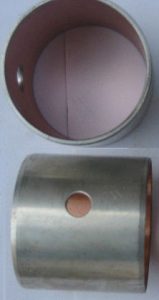
Since we just talked about this, we might as well start with it. Even though these are easy to replace, since most can be replaced with an arbor press and a little ingenuity, most of them also require honing or reaming afterwards. As you press in the new bushing it can deform slightly, always make sure you check for fitment according to your workshop/service manual. If you’re not sure, give us a call and we can help you get the right manual for your engine.
Checking for Straightness
This is becoming more of an issue with the old-time mentality of dumping half a can of ether in the engine if it won’t start. I just have one thing to say. STOP THAT! This is one of the many reasons we see newer engines needing to be rebuilt too early. Ether used in modern diesel engines often cause connecting rod failures as well as being very dangerous since it can start your machine on fire if it has a grid heater style glow plug/starting aid system. Using a framing square and a pair of vernier/calipers, measure all the wrist pin sides of the connecting rods to the square while keeping the bearing side squared up. They should all come out to the same measurement. If not, the one that is off is probably the odd man out and should be replaced.
Hardware
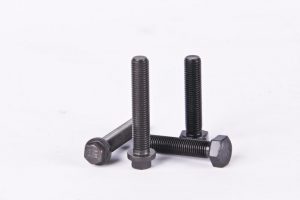
Most connecting rod bolts and hardware are torqued to yield in modern engines. These should be replaced every time they are removed. This is also a good insurance policy that doesn’t cost an arm and a leg and should give you some peace of mind.
Line Honing
Line honing will give your connecting rod bearings the best chance of staying in place. It helps to assure your bearing bores are straight and perfectly round. It also allows for a fresh surface finish to help the bearings stay in the spot you install them.
Demagnetize
Lastly, make sure you demagnetize your connecting rods. This step is often overlooked because most people may not have even considered it. As your engine runs, the build up of heat paired with the electric current running through your engine can cause a buildup of magnetism on some of the engine components. Your connecting rods are one of those components. Overtime it can cause wear metals to build up around the connecting rods and lead to bearing failures. While this is more common on high hours engines but it is good practice to do every time.
Deutz 912 Con Rod Tips
Over our many decades of working with Deutz engines, we have learned a few things. Here is an example related to the Deutz 912 series engines. The Deutz 912 came with two different style connecting rods: weighted and unweighted and they can’t be used interchangeably. So how do you tell them apart?
The unweighted style rod uses a 19 mm rod bolt (Deutz PN: 223 5520) which accepts a 6-point socket, and the weighted style rod takes a 13 mm rod bolt (Deutz PN: 423 4117) which also accepts a 6 point socket. Both rod styles use the same 35 mm rod bushing (Deutz PN: 337 1612).
We hope these tips can help you build a better engine. Foley Engines wants to give you the knowledge and resources to keep you up and running. If you don’t find what you need on our website we probably have it in stock. Give us a call at 866-821-2454 or e-mail us at info@foleyengines.com ; We are here to help.