How Often Should I Clean My Cooler?
- The amount of contamination in the cooling system cooler depends on the engine application and the general conditions of the engine.
- Spilled oil or fuel on the engine increases the risk of contamination. Be especially careful if the engine is used in dusty environments as the cooler/radiator can become coated, not just with fuel or oil, but the dust and debris that sticks to it and inhibits the cooler’s ability to do its job.
- Serious contamination can occur for example:
- On construction sites where there is a high level of air-borne dust.
- In harvesting applications there are high concentrations of chaff, chopped straw, etc… in the vicinity of the machine.
- In wooded areas where leaves and cutting debris can become airborne.
- And any other high dust environment.
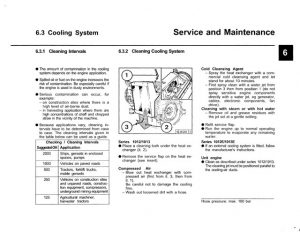
- Because application operating conditions vary, cooler/radiator cleaning intervals should be determined on a case-by-case basis. The cleaning intervals given on the table below can be used as a general guide, but you should always defer to your engine manuals guidance.
- Cleaning can be done with compressed air and/or moderately pressurized water. Be cautious to only blow/wash straight through the cooler and not angled to the cooling fins to avoid damaging the cooler. They are made of softer metals because, among other reasons, those materials conduct heat better.
- In applications where oil and grease buildup might occur, a mild non-caustic detergent can be applied before washing. Be sure to flush/rinse thoroughly as left over detergent can lead to excessive debris buildup and/or corrosion.
| Suggested OH Interval | Application |
|---|---|
| 2000 | Ships, gensets in enclosed spaces, pumps |
| 1000 | Vehicles on paved roads |
| 500 | Tractors, forklift trucks, mobile gensets |
| 250 | Vehicles on construction sites and unpaved roads, construction equipment, compressors, underground mining equipment |
| 125 | Agricultural machinery, harvester tractors |
Cleaning Cooling System
FOR THE ENTIRE GUIDE, DOWNLOAD THE PDF BELOW.