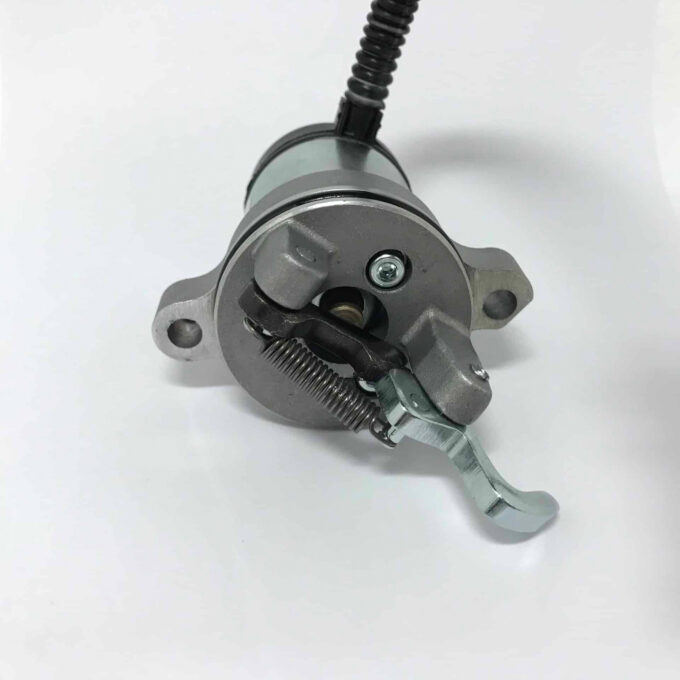
This Foley Engines Tech Tip focuses o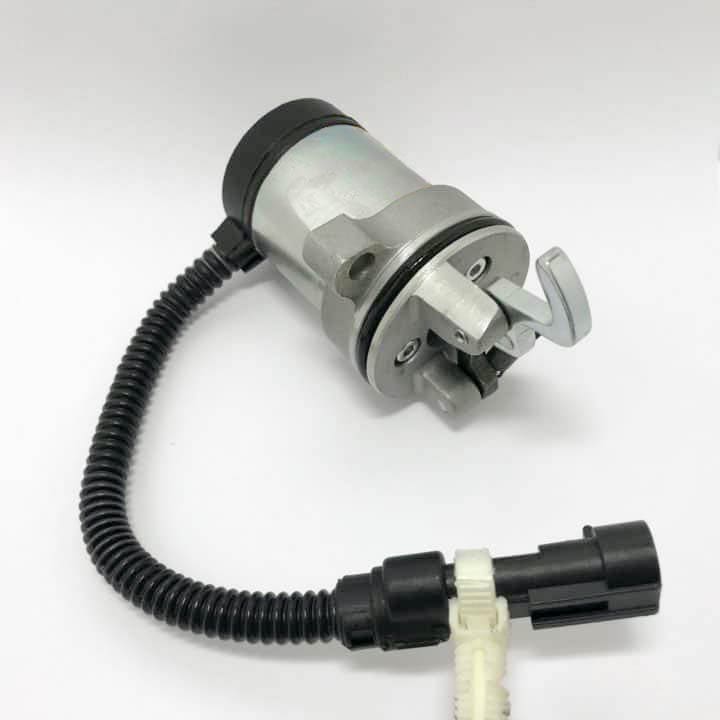 n the electronic shut off solenoid as used on the 1011, 1011F and 2011 engine models. The electronic shut off solenoid, which people refer to as “ESO” or “fuel shutoff solenoid”, is a very common failure on these Deutz engines. We stock a ton of them. Because we answer so many questions about these solenoids we decided write this Tech Tip to discuss what they do and and when they fail.
ESO’s Role
The general role of the engine shut off solenoid is to directly or mechanically restrict the flow of fuel to the injection pumps or injectors causing the engine to stop. For the Deutz engine series we are discussing, this is done mechanically by pushing the fuel control rod (Fuel Rack) all the way toward the back (flywheel side) of the engine which completely restricts fuel flow from the injection pumps to the injectors. We refer to this as pushing the rack to “no fuel”. The solenoid, in its normal unenergized state will keep the rack in the “no fuel” position permanently until removed or energized. Once energized, the solenoid actuates and swings the armature out of the way allowing the rack to spring back forward into the “full fuel” position allowing the engine to start.
Why Do They Fail?
Just like any other electronic component, the primary cause of failure is due to heat. This heat can be due to the engine heat and/or the heat generated from excess electrical resistance in the coil of the solenoid.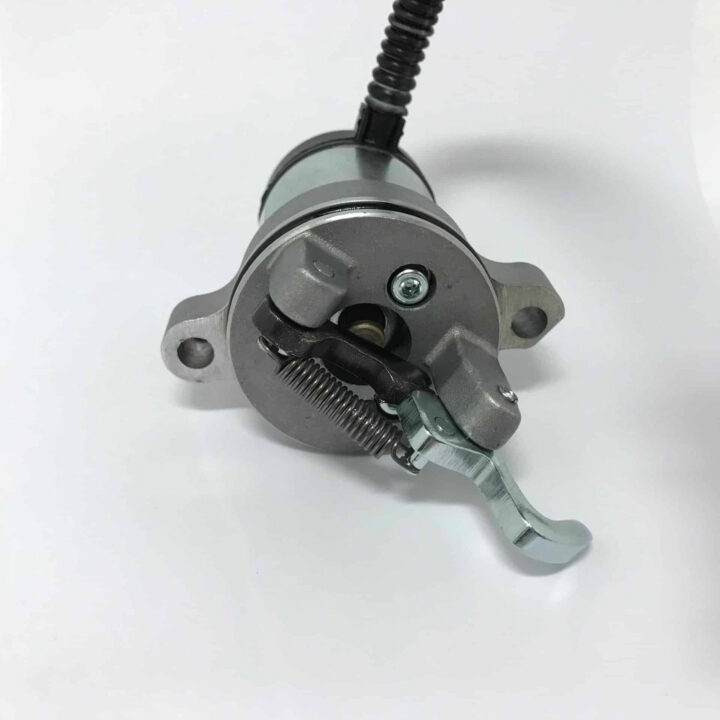 To paint a picture, the solenoid wants to pull a certain amount of electrical amperage or current, but that effort becomes harder in a hot solenoid because the heat itself creates electrical resistance making the solenoid have to pull harder to get the amount of electricity it wants which itself creates more heat and so on. As this cycle continues a some point there is an internal short circuit in the solenoid coil since the ESO is essentially just a small electromagnet making it susceptible to this kind of failure. Since heat increases resistance/reduces the flow of electrical current, it in turn reduces the magnetic field that is holding the solenoid open. Once you hit the tipping point, your engine shuts off. Once this has occurred, one of two things will happen, the ESO will be permanently shorted open or closed, or it will cause resistance that will allow it to work when it is cold but drop out again after it heats back up.
What You Can Do
There are a few things you can do to extend the life of your ESO. First off, keep your engine bay clean and air free flowing. With some applications this is harder than others, but with some occasional effort it is possible more often than not. Leaking oil and buildup can cause degradation of wiring harnesses and other plastic components. It can also increase the buildup of dirt and debris that stick to the engine that in turn reduces heat transfer to the cooling air flow making it harder for your engine to cool down.
Next thing you can do is to buy right. There are an infinite list of companies that sell a replacement for this solenoid, but they are not all created equal and pricing varies widely. As I was told a long time ago, “you get what you pay for.” Even though a cheap variant might function the same way initially, it will most definitely not be made with the higher quality materials that can stand up to the harsh environment these solenoids are exposed to day in and day out. If it fails again in a month, will the savings be worth the disruption, downtime and additional cost to replace it again?
Lastly, be prepared. This is not just a Boy Scout’s motto since all ESOs have a finite lifespan. Said another way, it is not a matter of if it stops working, but a matter of when during the life of the engine. Prepare yourself by having a spare one on the shelf so you can minimize downtime and finish the job you wanted to be working on. Spending a little extra now can save you much more in the long-run.
We stock Deutz 1011 / 1011F / 2011 Fuel Shutoff Solenoids on our website ready to ship when you need them. Be sure to read the description to confirm if you have the early style solenoid that requires a small wiring harness that we offer for the early style or the late style that won’t require the harness.
We take customer support seriously, which is why we maintain a library of Tech Tips. Some other tips that may be helpful to you for your Deutz engine include:
Tech Tip 243: Changing Your Deutz 1011 & 2011 Timing Belt;
Tech Tip 241: Replacing Your Deutz 1011 & 2011 Injection Pumps – Part 1; and
Tech Tip 242: Replacing Your Deutz 1011 & 2011 Injection Pumps – Part 2