This Tech Tip is one of a number of tips we publish for the industrial engine community. It focuses on properly installing Deutz and Perkins cylinder heads. See
- Tech Tip #30: Installing a Cylinder Head or
- Tech Tip #68: Foley Engines Head Installation Checklist
for more information on installing your cylinder head on your Deutz or Perkins engine.
 1) Hash Marks Count
As a general rule, the more hash marks on the top of a bolt, the higher the grade. Grade 5 bolts typically have three hash marks on top and Grade 8 bolts have five hash marks. The chart below shows how to tell a Grade 5 bolt from a Grade 8 bolt.

2) Torque Values: Part One
Modern diesels such as those manufactured by Deutz and Perkins often have a very complicated three or four head bolt tightening process which involves tightening the bolts sequentially to specific torque values and a final step consisting of tightening the bolts to a specific angle. Be sure to check you manual for the proper tightening sequence or if you can’t locate your manual you can e-mail us at info@foleyengines.com or call us at 800.233.6539 and we are happy to help.
3) Torque Values: Part Two
We have listed below torque values by size of bolts for bolts without lubricant applied. Use a reduced torque value if the bolt has been lubricated. For help with installing cylinder heads and valves on your Perkins, Deutz, or other industrial engine, take a look at Tech Tip #10: Torque Values and Valve Settings and Tech Tip #30: Installing a Cylinder Head for more information.
 4) Deutz 912 Cylinder Head Torque Considerations
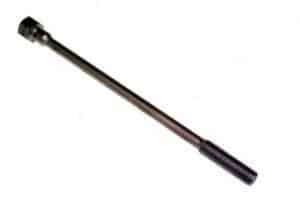
We recently ran into an odd situation with one of our customers. He was installing a set of new Deutz heads on his F6L912 Deutz diesel. Besides new heads, he bought new 912 head bolts and washers. He was tightening down the head bolts in the correct, sequential pattern until he felt a change in the resistance. Lo and behold the new washers had stuck to the bolts and the 912 head bolts and washers turned together as one.
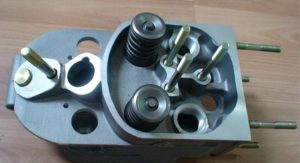 At some point the washers loosened their grip on the bolts and this created this unusual feeling. The solution is simple. Both sides of the washer should be coated with engine assembly lube. Our shop people use a mixture of SAE30 motor oil and STP as assembly lube with good results.
5) 51 Bolt Torque Specs by Size and Grade
The chart below is presented showing bolt torque value by size. We wish to thank the AERA for preparing this chart.
|
Bolt Torque – Grade 5
|
Bolt Torque – Grade 8
|
||||||||
|
Body Size
|
Cast Iron (Nm)
|
Cast Iron (Ft/lb)
|
Alum (Nm)
|
Alum (Ft/lb)
|
Body Size>
|
Cast Iron (Nm)
|
Cast Iron (Ft/lb)
|
Alum (Nm)
|
Alum (Ft/lb)
|
|
¼” 20
|
9
|
7
|
8
|
6
|
¼” 20
|
15
|
11
|
12
|
9
|
|
¼” 28
|
12
|
9
|
9
|
7
|
¼” 28
|
18
|
13
|
14
|
10
|
|
5/16” 18
|
2
|
15
|
16
|
12
|
5/16” 18
|
30
|
22
|
24
|
18
|
|
5/16” 24
|
23
|
17
|
19
|
14
|
5/16” 24
|
33
|
24
|
25
|
19<
|
|
3/8” 16
|
40
|
30
|
25
|
20
|
3/8” 16
|
55
|
40
|
40
|
30
|
|
3/8” 24
|
40
|
30
|
35
|
25
|
3/8” 24
|
>60
|
45
|
45
|
35
|
|
7/16” 14
|
60
|
45
|
>45
|
35
|
7/16” 14
|
90
|
65
|
65
|
50
|
|
7/16” 20
|
65
|
50
|
55
|
40
|
7/16” 20
|
95
|
70
|
75
|
55
|
|
½” 13
|
95
|
70
|
75
|
>55
|
½” 13
|
130
|
95
|
100
|
75
|
|
½” 20
|
100
|
75
|
80
|
60
|
½” 20
|
150
|
110
|
120
|
90
|
|
9/16” 12
|
135
|
100
|
110
|
80
|
9/16” 12
|
190
|
140
|
150
|
110
|
|
9/16” 18
|
150
|
110
|
115
|
80
|
9/16” 18
|
210
|
155
|
170
|
125
|
|
5/8” 11
|
180
|
135
|
150
|
110
|
5/8” 11
|
255
|
190
|
205
|
150
|
|
5/8” 18
|
210
|
155
|
160
|
120
|
5/8” 18
|
>590
|
15
|
230
|
170
|
|
>¾” 10
|
325
|
240
|
255
|
190
|
¾” 10
|
460
|
340
|
365
|
270
|
|
¾” 16
|
365
|
270
|
285
|
210
|
¾” 16
|
515
|
380
|
410
|
300<
|
|
7/8” 9
|
490
|
360
|
380
|
280
|
7/8” 9
|
745
|
550
|
600
|
440
|
|
7/8” 14
|
530
|
390
|
420
|
310
|
7/8” 14>
|
825
|
610
|
660
|
490
|
|
1” 8
|
720
|
530
|
570
|
420
|
1” 8
|
1100
|
820
|
890
|
660
|
|
1” 14
|
800
|
590
|
650
|
480
|
1” 14
|
1200
|
890
|
960
|
710
|